
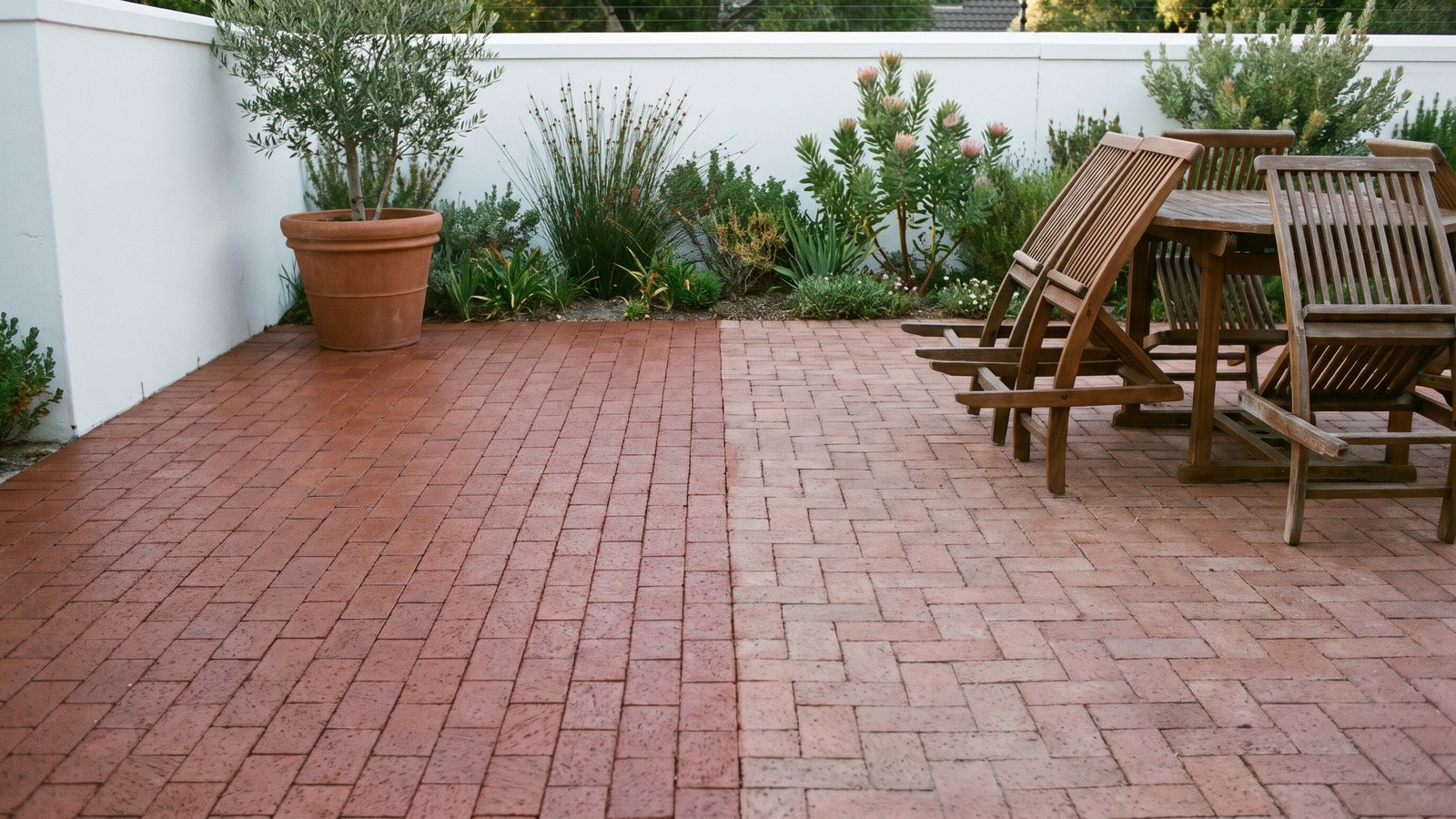
Paver sealing in Cape Town: we seal and re-seal pavers across the Western Cape, priced per job. Most sealers deepen the colour of concrete pavers, and how well a sealer resists oil stains depends on the product. It adds nothing to their strength. A written quote should name the sealer type, the area, and whether the paving is cleaned first.
What a paver sealing quote should specify
Contents
Sealing is optional, and the Concrete Manufacturers Association (CMA) is blunt about it: in most cases, its laying manual says, the cost of sealers will not warrant the application. Where you want it, the quote should name a sealer that suits your paving and its conditions, and say whether it works over any sealer already on the surface.
The CMHA, the Concrete Masonry and Hardscapes Association, is the North American industry body for concrete pavers, and its tech note on cleaning and sealing advises consulting the sealer manufacturer before use, to confirm the product suits the conditions where it is going.
- The sealer type and the finish: flat, low sheen or gloss.
- The area in square metres.
- The cleaning and efflorescence removal before sealing.
- The number of coats.
- How long the paving stays closed while the sealer dries.
How paver sealing is done
The chosen sealer’s own instructions set the surface preparation, the drying time, the number of coats and when the paving reopens to traffic.
- Before. All dirt, oil stains and efflorescence come off first; see our paving cleaning page for that stage. The CMHA asks for at least 24 hours without moisture or surface dampness before application.
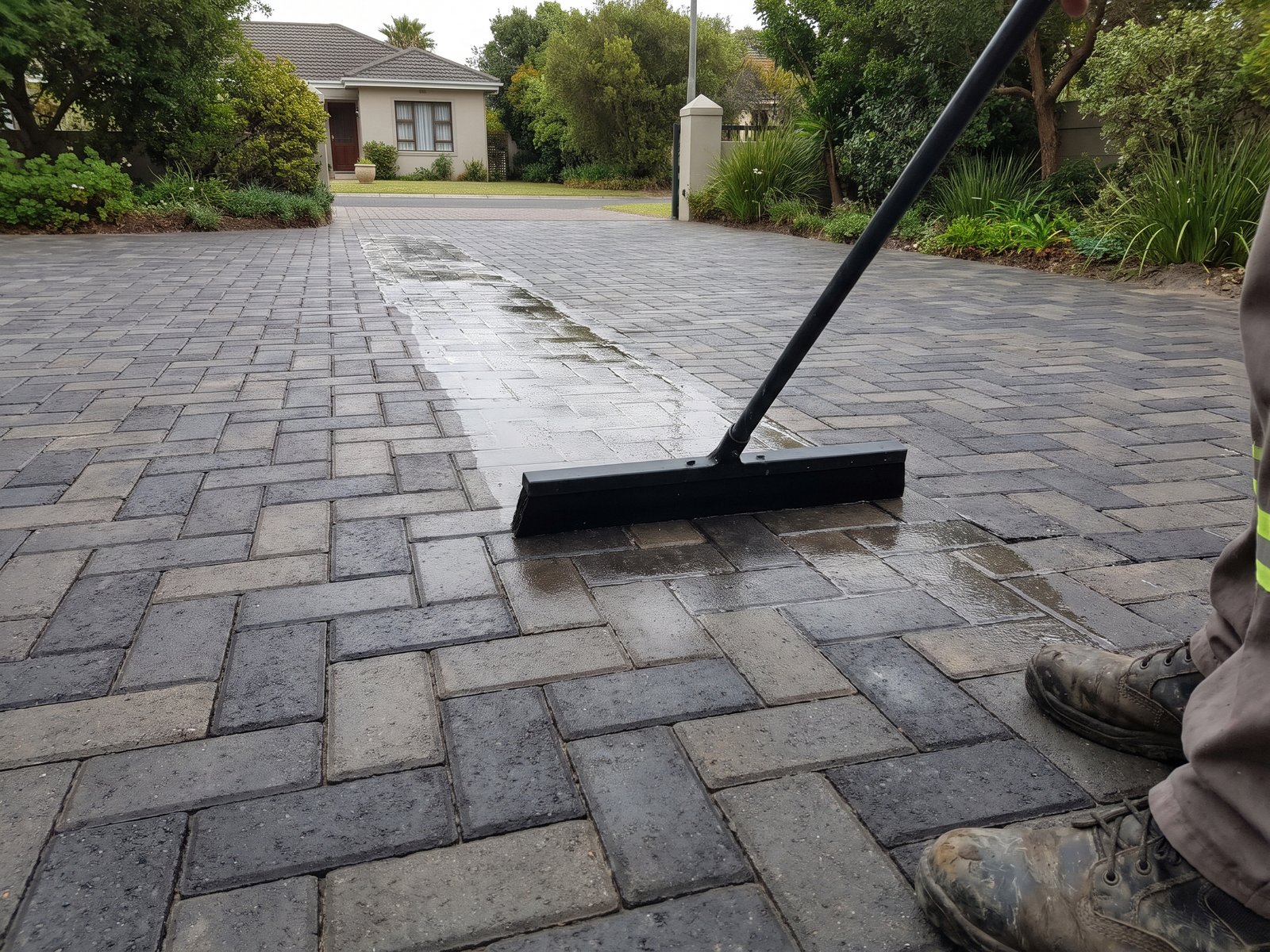
- During. Surfaces and plants around the paving are covered. For low-pressure spraying the CMHA advises calm wind, so the sealer does not go on unevenly or blow onto other surfaces.
- After. Traffic stays off until the sealer is completely dry, typically 24 hours. Over-applied sealer can leave the surface slippery once it cures.
Sealing new paving
On new paving, the chosen sealer’s instructions set the waiting period. One paving sealer data sheet asks for new blocks to be left 3 months after laying, to allow efflorescence to come out of the pavers before coating. Another sets a minimum of 3 months.
The CMHA explains the risk of going early. A sealer can whiten when new pavers have not yet been exposed to enough moisture, or when the surface and joints are still damp. Efflorescence does go on its own in time: the CMA says rain usually washes it away in about 1 to 2 years.
Re-sealing worn pavers
The CMA’s laying manual says abrasion removes surface sealers, so sealing becomes a regular maintenance item.
Before a re-seal, find out which sealer is on the paving now, and follow that product’s instructions on preparation and compatibility. A worn urethane is a bigger job, because it cannot be renewed by simply re-coating. We clean and re-seal pavers.
Paver sealing prices
Paver sealing is priced per job. Laying new paving is priced at the rates on our paving prices in Cape Town page.
After the job, look for white or cloudy patches, an uneven sheen, and any spot that feels slippery underfoot.
To book paver sealing, call 081 408 9946.