
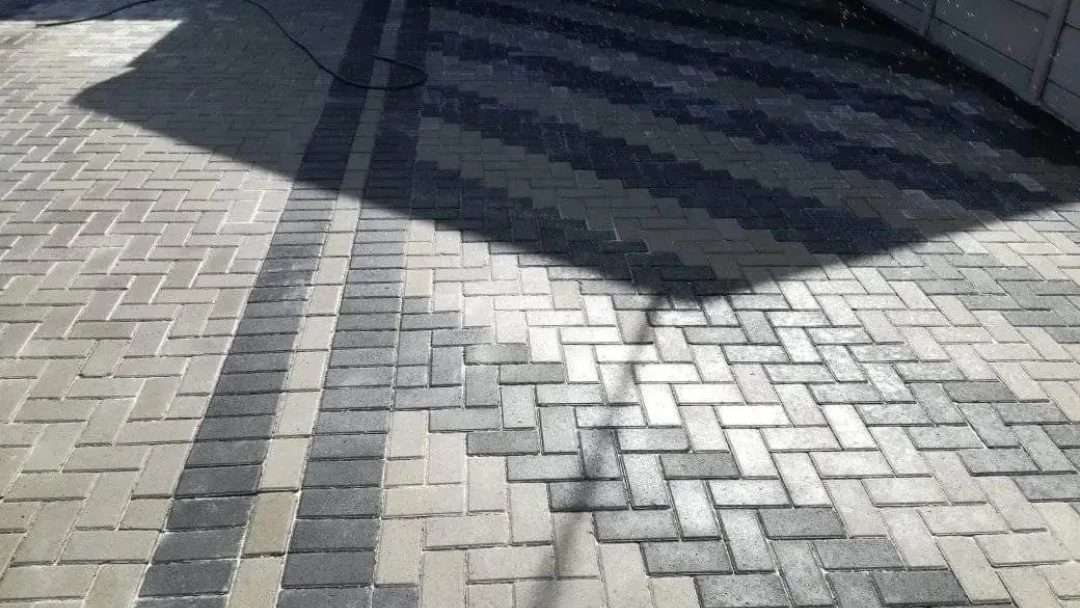
The pattern you lay paving in is a structural decision before it is a style one. Herringbone holds together under braking and turning; stretcher bond does not. Cobble and cobblestone are laid in their own patterns again — fans, arcs and segmental courses — and cost more in labour for it. Basketweave looks right on a patio and creeps on a driveway. This page covers what each pattern is actually for, so you can choose one that suits the surface rather than only the photograph.
The patterns, and what each is good at
Contents
| Pattern | How it behaves | Use it on | Cutting waste |
|---|---|---|---|
| Herringbone 45° | Strongest interlock; shares braking and turning load between bricks | Driveways, parking, anywhere vehicles turn | Highest — angled edge cuts |
| Herringbone 90° | Nearly as strong, simpler edges | Driveways with long straight runs | Moderate |
| Stretcher bond | Cheapest and fastest; creeps in the direction of travel | Paths, patios, foot traffic | Low |
| Basketweave | No continuous joint lines; visually calm | Patios, courtyards | Low |
| Running bond diagonal | Makes narrow spaces read wider | Side passages, small courtyards | High |
| Crazy paving | Irregular stone, hand-fitted, no repeat | Garden paths, feature areas, older homes | N/A — fitted by eye |
Why herringbone on a driveway is not a preference
When a car brakes or turns its wheels, it pushes the surface horizontally. In stretcher bond those forces run along continuous straight joints, and the bricks gradually shunt — you see it as a wavy line near the garage and joints opening at the entrance.
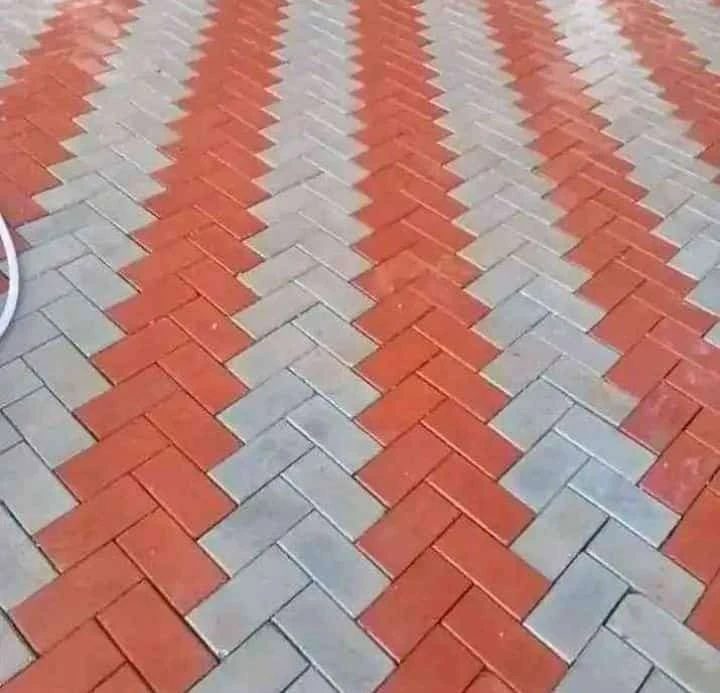
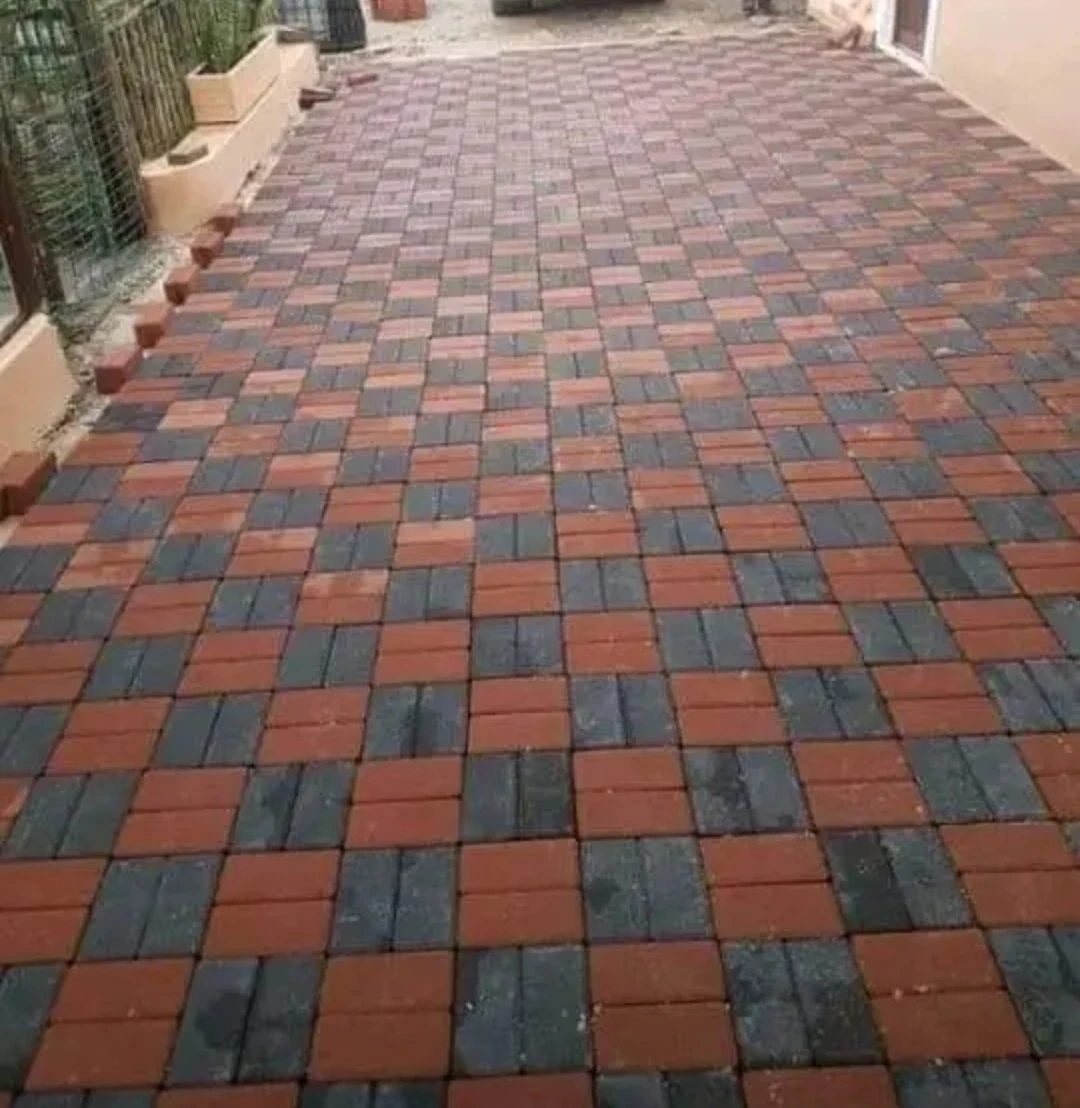
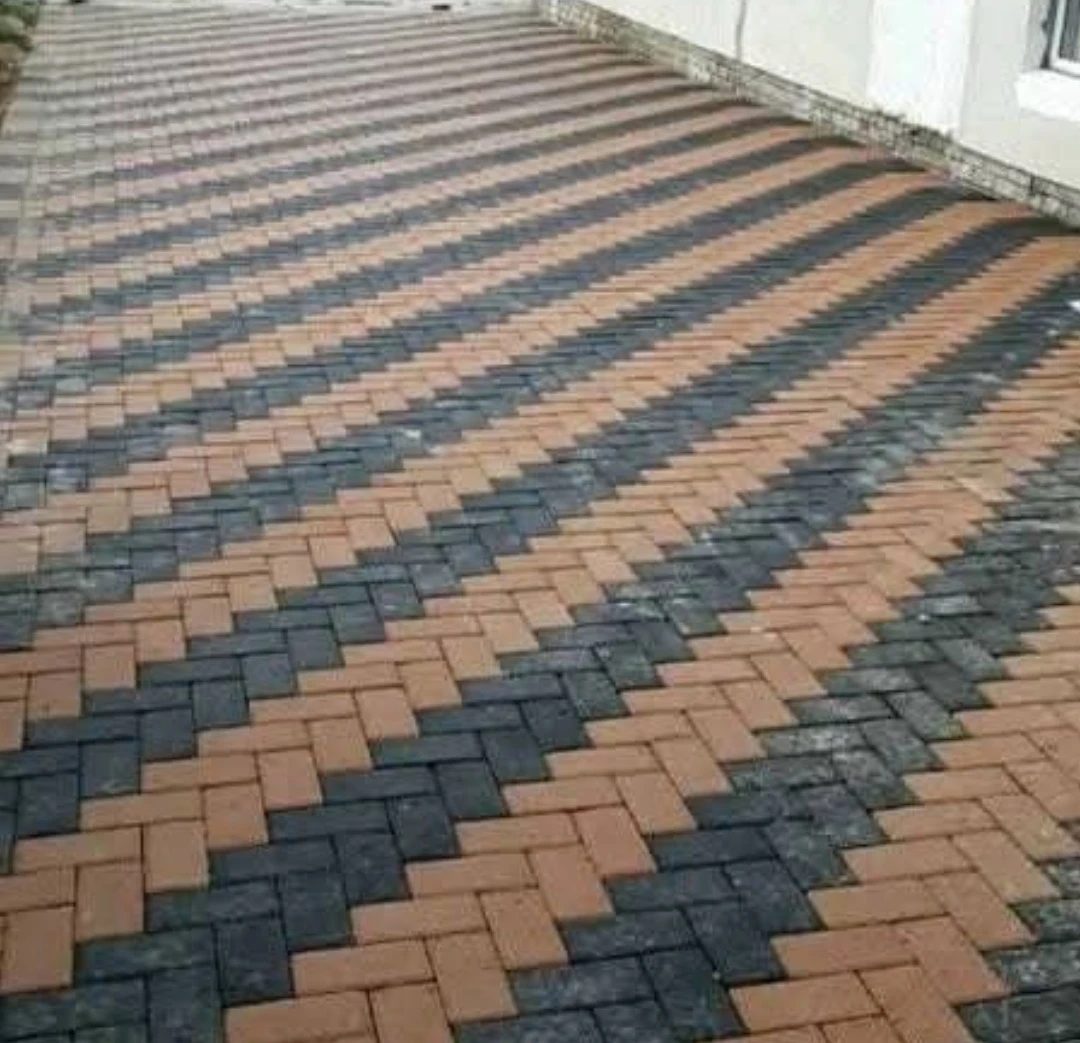
Herringbone has no continuous joint in the direction of travel. Every brick is locked by its neighbours at 90° to it, so a push on one is resisted by several. Laid at 45° to the direction of travel it also resists turning forces, which is why it is the standard for vehicle surfaces everywhere. It costs more in labour because every edge needs an angled cut, and that is the trade-off — more cutting now, no re-laying in three years. Full costs are on our paving prices Cape Town page.
Crazy paving, done properly
Crazy paving is irregular flagstone fitted by hand so the joints stay roughly even and no piece rocks. It suits older Cape homes, garden paths and feature areas, and it is entirely a craft job — two paviors will produce visibly different results from the same pallet.
What separates good from bad: consistent joint width, no piece smaller than a fist, bigger stones carrying the traffic line, and a jointing mortar or stabilised sand that will not wash out. Badly done, it is a trip hazard with weeds. It is foot-traffic work — crazy paving under vehicles will rock and crack, because irregular pieces have no interlock at all.
Cobble and cobblestone paving
Cobble is a unit, not a pattern — small setts, either natural stone or cast concrete, laid tight in courses. Because the units are small, cobble is almost always laid in a pattern of its own: a fan or arc on a courtyard and werf, segmental courses on a curved driveway, or plain running bond where the space is narrow.
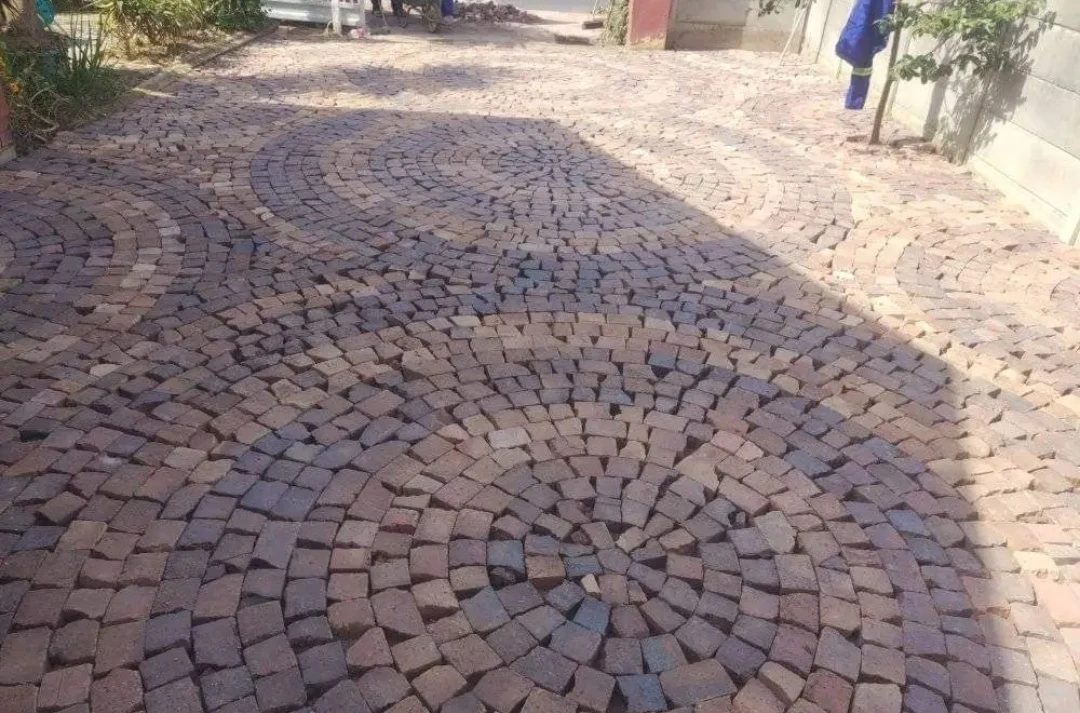
It is the surface that belongs on older Cape properties. We lay a lot of it in the Winelands — the historic core of Stellenbosch and the village properties and werfs around Franschhoek — where a modern rectangular paver next to a Cape Dutch gable simply looks wrong.
| Laying pattern | Where it suits | Labour | Installed rate |
|---|---|---|---|
| Running bond courses | Narrow passages, straight driveways | Lowest of the cobble options | R380 – R450/m² |
| Segmental / curved courses | Curved entrances and approaches | More setting out | R400 – R500/m² |
| Fan or arc | Courtyards, werfs, entrance aprons | Slowest, most skilled | R420 – R560/m² |
| Cobble border to brick field | Framing a driveway in cobble at a lower cost | Edge work only | Priced per linear metre |
Cobble runs R380 to R520 per square metre installed for ordinary courses, which is above the R300 to R420 a standard grey brick driveway costs. The difference is not the stone. It is that there are several times more units in a square metre, every one has to be set and every edge has to be cut in, and a fan or arc has to be set out before any of that starts.
Cobble under vehicles
Cobble carries traffic perfectly well, provided it is laid on the same compacted G5 sub-base a brick driveway needs and restrained at every edge. What fails is cobble bedded straight onto sand: small units have less contact area than a large paver, so each one carries more load, and they work loose faster. On a driveway we also keep the joints tight and use a stabilised jointing sand, because open joints between small setts empty quickly.
Pattern choices people regret
- Stretcher bond on a driveway. The single most common reason we are called to re-lay a driveway that is only a few years old.
- A busy pattern in a small courtyard. Strong repeating patterns make small spaces feel smaller. Basketweave or large units read calmer.
- Two patterns meeting without a border. Where a driveway meets a patio, a soldier-course border gives the change somewhere to happen. Without it the junction looks like a mistake.
- Diagonal everything. Diagonal laying costs noticeably more in cutting and waste. Worth it in a narrow passage, wasteful across a large open area.
- Mixing colours to a photograph. Batch variation is real. We lay from several packs at once so any variation is spread rather than showing up as a block of odd colour.
Borders and edges
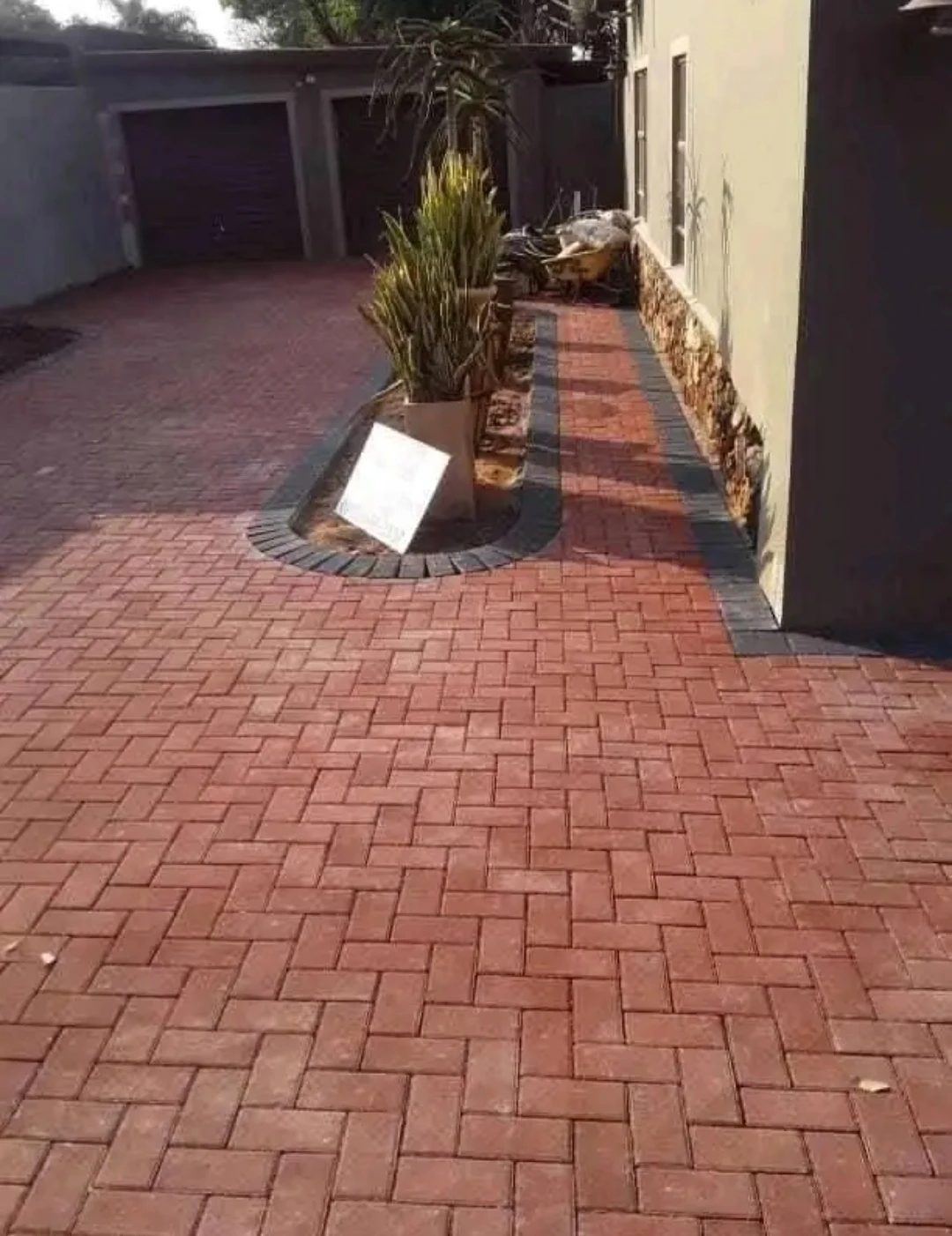
A soldier course — pavers laid end-on around the perimeter — does two jobs. It frames the area so cut pieces are not the first thing you see, and it gives the field of paving something to push against. On a driveway the border also takes the wheel load at the edge, which is where paving fails first. In a contrasting colour it defines the shape; in the same colour it just looks finished.
Pattern questions
Does herringbone use more bricks?
Roughly the same number, but more get cut, so allow about 5–10% more material and more labour than stretcher bond.
Can we change pattern partway?
Yes, with a border at the transition. Straight into another pattern with no break looks unresolved.
Which pattern is cheapest?
Stretcher bond, on both material and labour. It is a fine choice for a path and a poor one for a driveway.
Is crazy paving cheaper than brick?
Usually not. The stone can be, but the hand-fitting labour is slow and skilled.
Is cobblestone paving more expensive than brick?
Yes. R380 to R520 per square metre installed against R300 to R420 for a standard grey brick driveway. The cost is labour — more units per square metre, more cutting, and setting out on a fan or arc.
Can cobble be used on a driveway?
Yes, on a proper compacted sub-base with restrained edges and stabilised joints. Cobble laid on sand alone works loose faster than large pavers do, because each small sett carries more load over less contact area.
Can you match an existing pattern?
Usually. Bring us a photo or leave a spare brick out and we will match pattern and, where the range still exists, colour.
Get a price for your pattern
Tell us the area and how it will be used, and we will recommend a pattern that suits the load and give you a written price. See all our paving services in Cape Town.
Prefer to talk? Call 081 408 9946